
How Georgia tax liens become tax sales, how the 12-month redemption works, and how to find owners before the courthouse steps.
Georgia is a tax-deed state with a right of redemption: the county can sell a property for unpaid tax, and the owner still has time to buy it back. Both steps create clear, public signals. This is a general overview, not legal advice.
01How it works
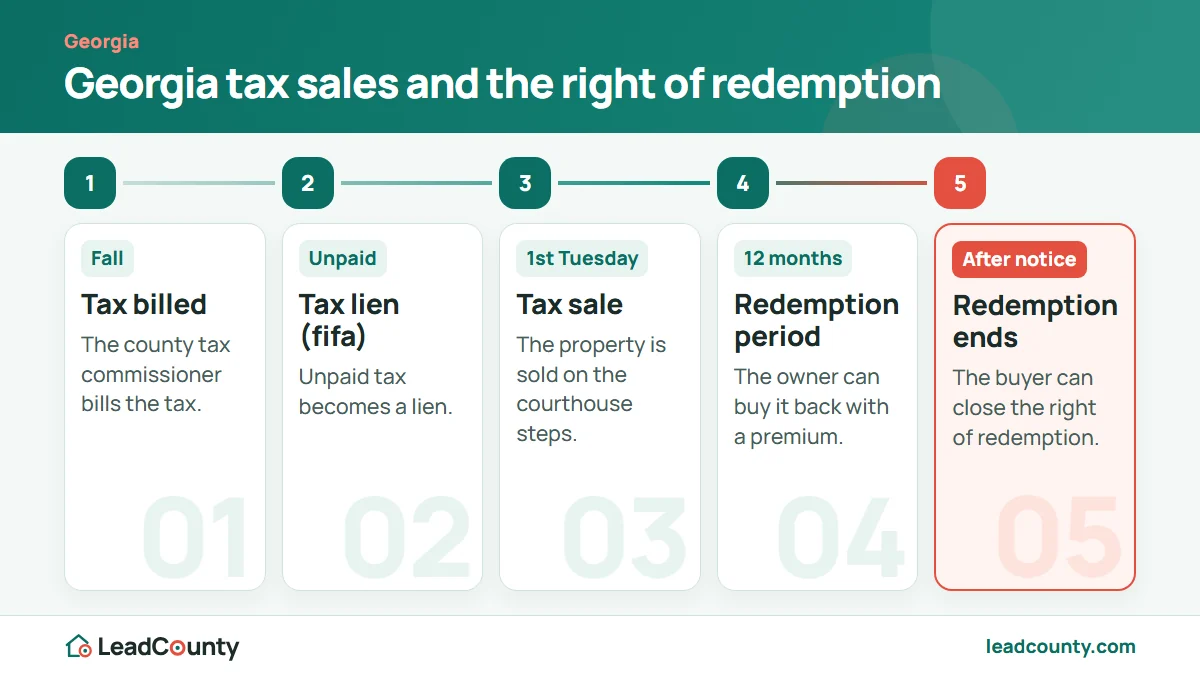
- Property tax is billed by the county tax commissioner, usually in the fall.
- Unpaid tax becomes a lien (a fifa), and after notice the property can be sold at a tax sale, usually held on the courthouse steps on the first Tuesday of the month.
- The former owner can usually redeem the property for 12 months after the sale by paying the sale price plus a premium (20% in the first year). After that, the buyer can end the right of redemption with a formal notice.
02Why it is a strong signal
- A fifa or a scheduled tax sale is a public, dated sign of trouble.
- Selling before the sale lets the owner keep their equity instead of losing it at auction.
- In metro Atlanta, many delinquent properties are rentals or inherited houses owned from out of state.
03How to work Georgia lists
- Stack tax delinquency with absentee owner, owned 15+ years and high equity.
- Watch the county's upcoming tax-sale list: owners on it have weeks, not months.
- Be clear and respectful; explain the options, including paying the tax.
04Where the data comes from
LeadCounty collects the tax assessor's roll (owners, values, sales) and the tax commissioner's records every week in Fulton, DeKalb, Cobb and Gwinnett counties, and estimates the yearly tax from the state's official millage digest where the bill itself is not published.


