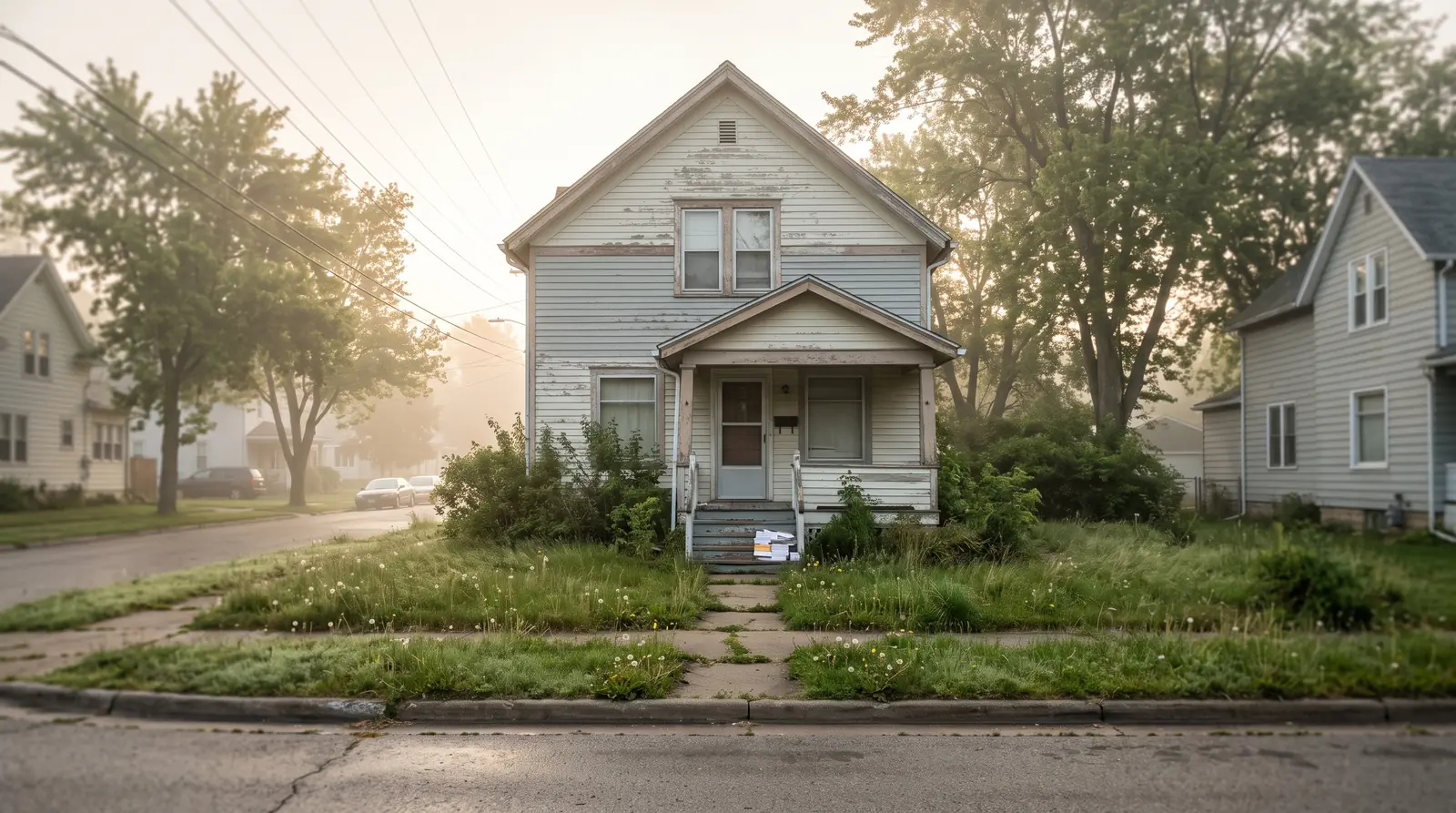
Tax-delinquent owners are one of the most popular lead types, and for good reason: unpaid property tax is a public, dated, money-based signal. Here is how it works in Ohio and how to use it well.
01How Ohio bills property tax
Ohio counties bill real-estate tax in two halves each year. The first half is usually due in winter (January or February) and the second half in summer (June or July). The county treasurer collects the money; the county auditor sets the value the tax is based on. Exact dates differ by county, so always check the county treasurer's website.
02Delinquent vs certified delinquent
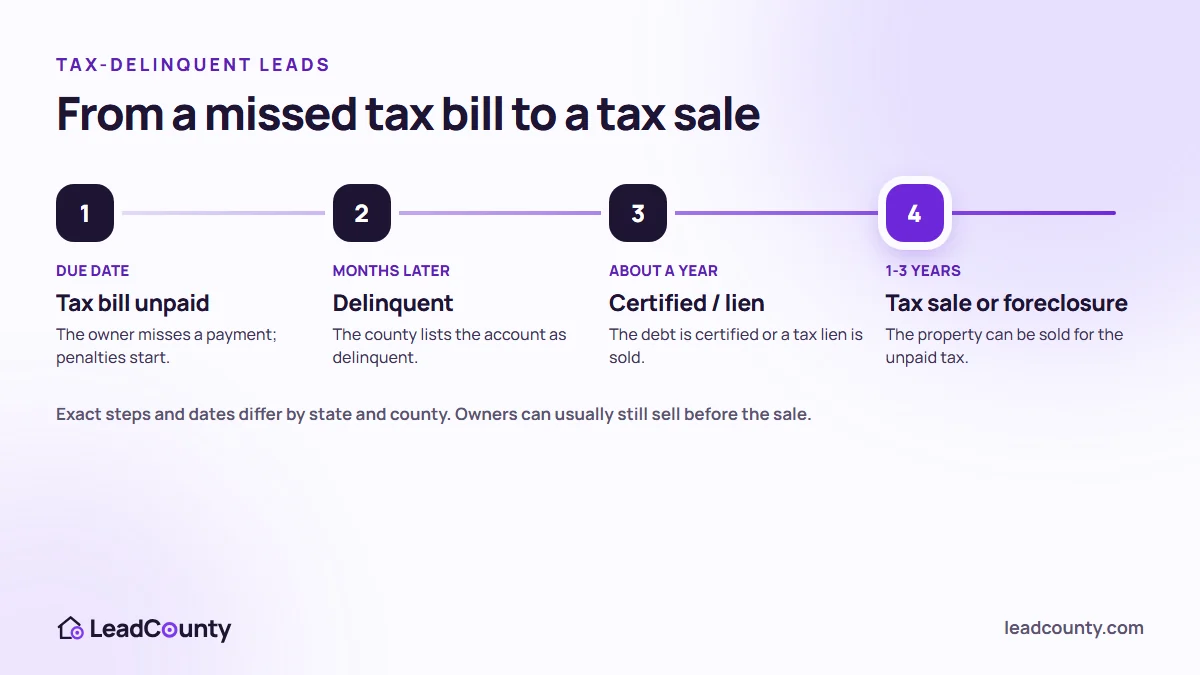
- Delinquent: a half was not paid by its due date. Penalties and interest start to grow.
- Certified delinquent: the tax stayed unpaid long enough that the county put it on its official delinquent list. From here the county can sell a tax certificate (lien) or start a tax foreclosure.
- Payment plan: many owners sign a payment contract with the treasurer. They are still behind, but they are trying.
03Which delinquent owners to call first
- Owners who are 3 or more years behind and owe a meaningful amount (for example $1,000+).
- Absentee or out-of-state owners: no one is living with the problem every day.
- Properties that also have an inheritance deed, a code case or look vacant.
- Leave out government, banks, churches and builders: they rarely sell to investors.
04How to approach them
Lead with help, not pressure. Many owners are embarrassed about unpaid tax. Explain that you buy houses as they are, that you can close quickly, and that the tax can be paid from the sale. Never threaten or pretend to work for the county.
05Timing
Tax data changes after each billing cycle and after payments post. LeadCounty refreshes every week, so an owner who just paid drops off your list and a new delinquency shows up in your Monday e-mail.