
Ohio uses judicial foreclosure: a lender (or the county, for unpaid tax) has to file a lawsuit in the county court of common pleas, and the property is sold at a sheriff's sale only after a judgment. This takes months, which gives owners time to sell on their own terms. This article is a general overview, not legal advice.
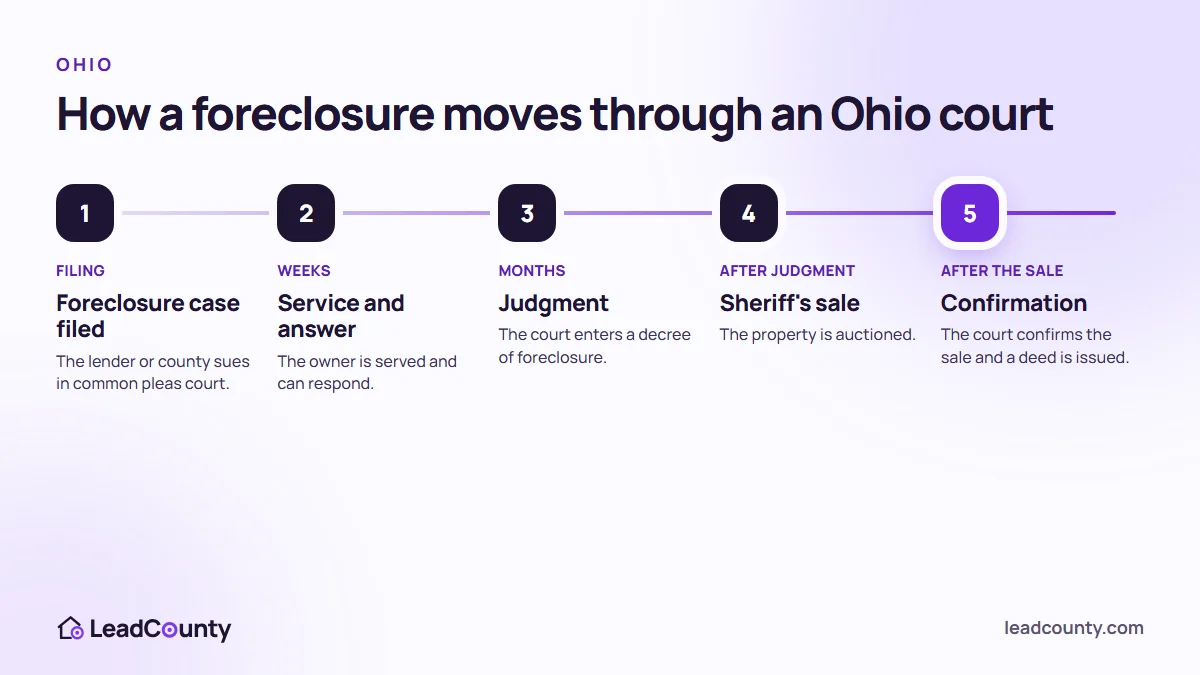
01The main steps
- Missed payments: the owner falls behind on the mortgage or the property tax.
- Complaint filed: the lender or county files a foreclosure case. Many counties also record a lis pendens on the property.
- Judgment: if the owner does not resolve the debt, the court orders the property sold.
- Sheriff's sale: the property is appraised and offered at a public auction, today often online.
- Confirmation: the court confirms the sale and the new owner receives a sheriff's deed.
02Tax foreclosures
When property tax stays unpaid, the county treasurer can foreclose too. Many Ohio counties also sell tax certificates (liens) to investors before that point.
03Where investors fit in
Before the sale, an owner can still sell the property, pay off the debt and keep any equity that is left. A fair cash offer can be a real help to an owner who would otherwise lose everything at auction.
04How to reach owners respectfully
- Be clear that you are a private buyer, not the lender, the court or a foreclosure-rescue service.
- Never charge an owner a fee or promise to "stop the foreclosure".
- Explain the options simply: sell now, keep the remaining equity, close on their timeline.
- Point them to free help as well: HUD-approved housing counselors and legal aid.
05Finding these properties
LeadCounty marks properties with a foreclosure filing, a sheriff's or tax-foreclosure sale, and those with a high foreclosure-risk score, so you can see them early and combine them with other signals such as absentee or inherited ownership.