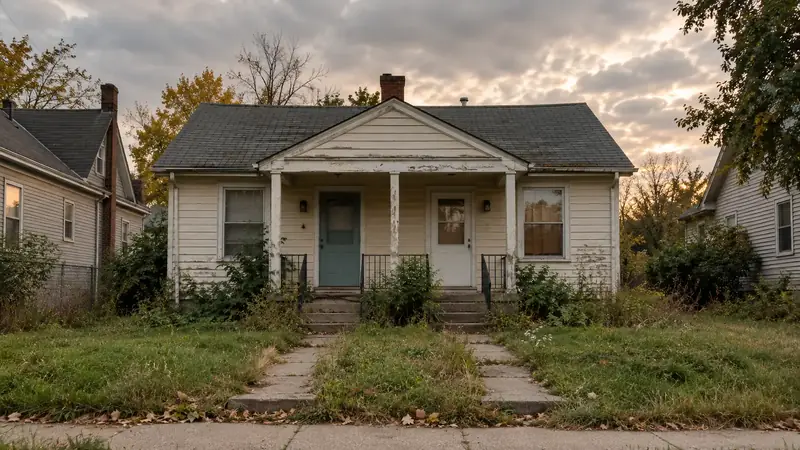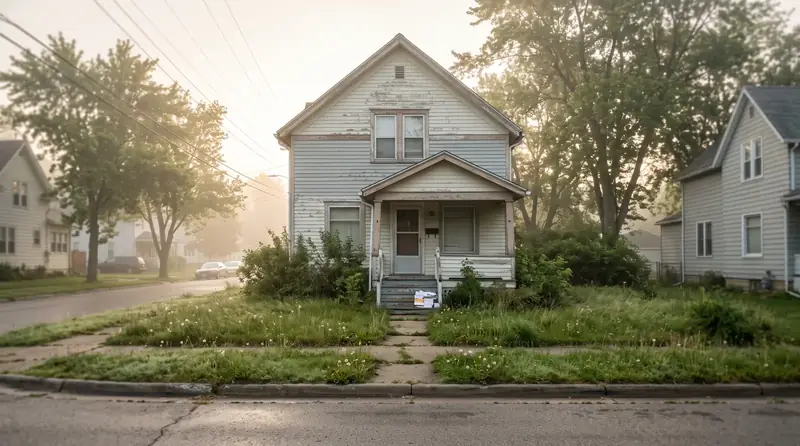
When someone dies, their house often passes to children or other relatives who already have a home of their own. Many of them live in another city or state. They now own a property they did not choose, may need to empty and repair, and must keep paying tax and insurance on. That is why inherited houses are among the best leads, and why they need the most care.
01How inheritance shows up in county records
- An inheritance or "certificate of transfer" deed: in Ohio, property often moves from an estate to heirs with this kind of deed.
- A $0 transfer to people with the same last name, or to a trust or estate.
- An owner name like "Estate of", "Heirs of" or a trustee after a death.
- A tax bill that starts going to a new, out-of-town mailing address.
02Why timing matters
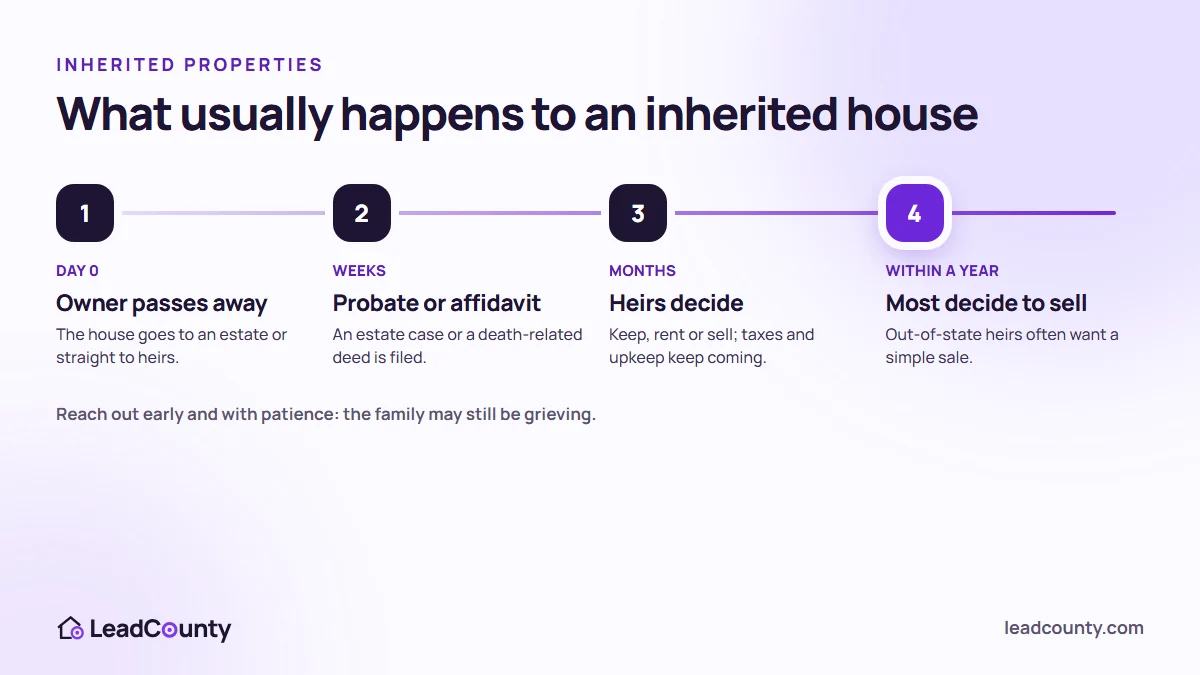
Most families decide what to do with an inherited house within the first year. Reaching them early, with a simple and fair option, is more helpful than reaching them after a long, stressful clean-out. Weekly data means you see a new inheritance deed within days, not months.
03How to reach out with respect
- Wait a little: avoid contacting a family in the first weeks after a death.
- Write a short, kind letter. Say who you are, that you buy houses as they are, and that there is no pressure.
- Offer real help: clearing out belongings, handling repairs, a flexible closing date.
- Never pretend to know the family or the person who died.
04Stack it
An inherited house with unpaid tax, no one living in it and an out-of-state heir is a much stronger lead than an inheritance deed alone. Tick those lists together in LeadCounty and the strongest cases rise to the top.