
Unpaid property tax is one of the most reliable motivated-seller signals: it is public, dated and measured in dollars. Here is where to look.
01Where the records are
- The county treasurer or tax collector keeps the tax roll: every bill, payment and balance. Many publish a delinquent list once or twice a year, and some offer an online account search.
- In some states the list is published in the local newspaper before a tax sale.
- The tax-sale or tax-certificate auction list is usually on the treasurer's or sheriff's site a few weeks before the sale.
02Three lists that mean different things
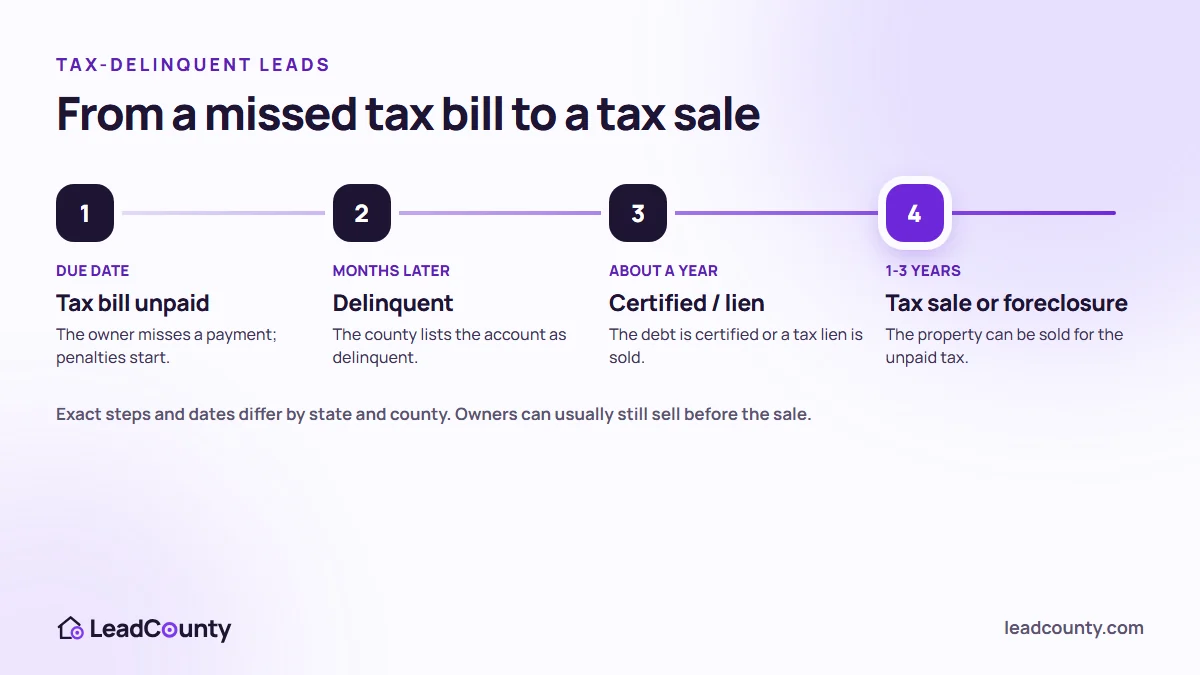
- Delinquent: at least one bill is past due. Many owners catch up quickly.
- Certified or several years delinquent: the county has formally listed the debt; the owner is well behind.
- Tax sale or tax foreclosure: a date is set. The owner has weeks, not months.
03How to use them
- Combine delinquency with absentee, inherited or long ownership: those owners are least attached to the house.
- Sort by years behind and amount owed.
- Check the payment history: a recent payment plan means the owner is trying to keep the house.
- Lead with help and respect; many owners do not know how close a sale is.
04The shortcut
Collecting these lists county by county, and matching them to owners and mailing addresses, takes hours every week. LeadCounty does it for every county we cover and flags each delinquent property with its amount and years behind, refreshed weekly.