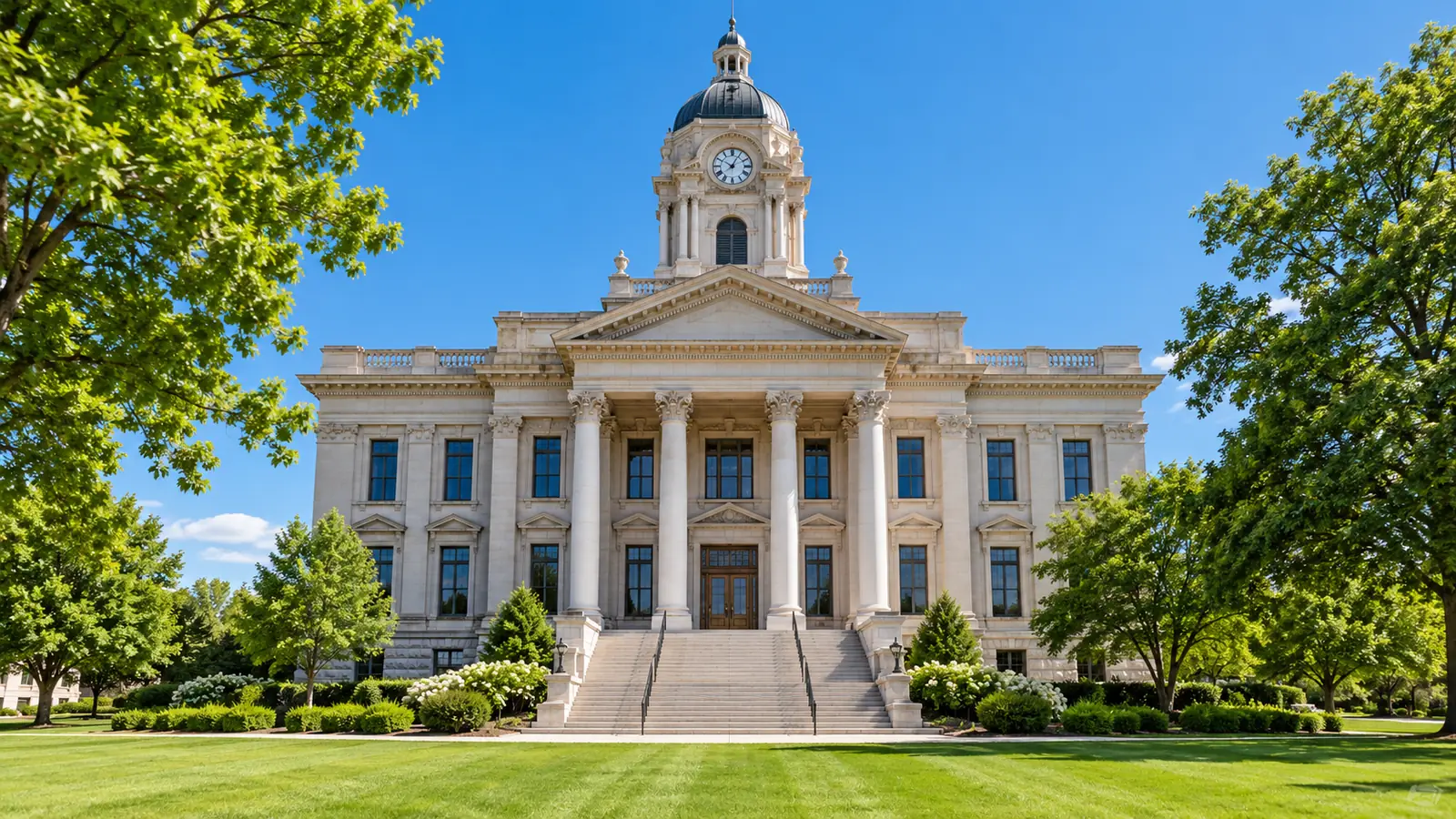
Every property record in the United States starts at a government office. Lead lists, real-estate websites and data vendors all copy from these same offices, often weeks or months later. If you know where the original records live, you know which data you can trust.
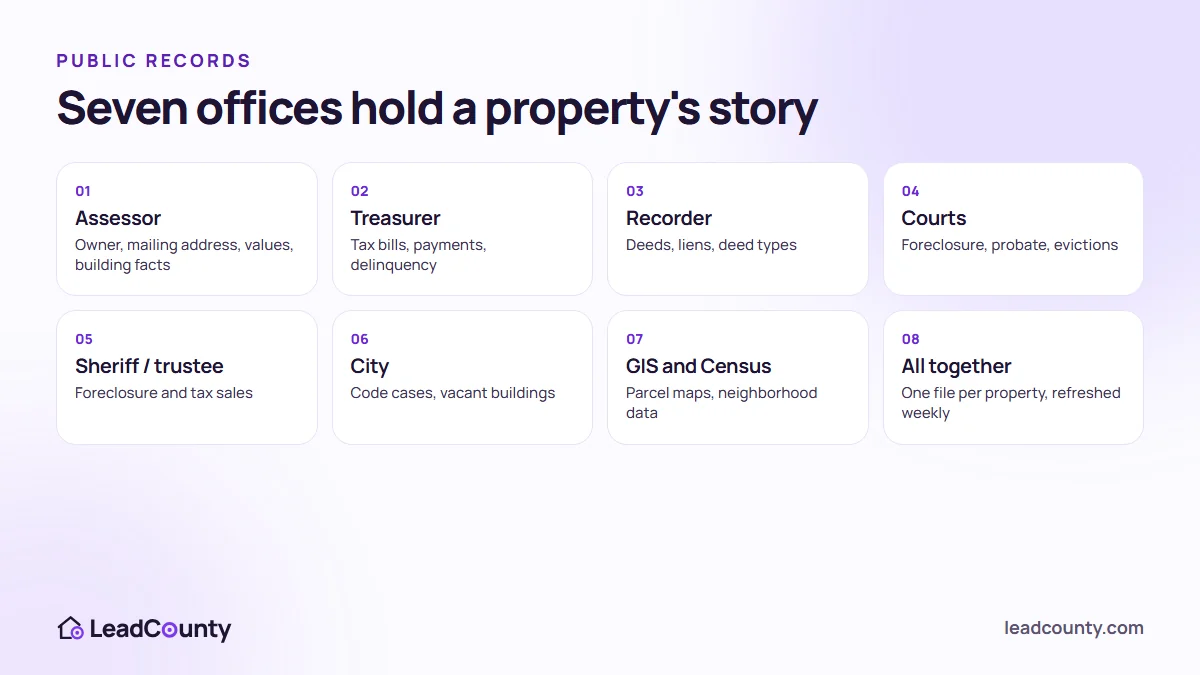
01The county auditor or assessor
The auditor (called the assessor or appraisal district in many states) keeps the main record for every parcel of land.
- Owner name and the mailing address where the tax bill goes
- Market value and assessed value, and how they changed over the years
- Land use, lot size, year built, living area, bedrooms, bathrooms
- Every recorded sale or transfer, with date, price and deed type
- Tax credits such as the owner-occupancy (homestead) credit
02The county treasurer or tax collector
The treasurer bills and collects property tax.
- The amount billed each half or year, and what was paid
- Unpaid (delinquent) tax and how many years it goes back
- Payment plans, tax certificates (liens) and tax-foreclosure lists
03The county recorder or register of deeds
The recorder keeps the original legal documents: deeds, mortgages, mortgage releases, liens, and in many counties lis pendens (a notice that a lawsuit about the property has started).
04Courts
- Common pleas (civil) courts: foreclosure cases
- Probate courts: estates after a death
- Municipal courts: evictions and housing-code cases
- The sheriff: sheriff's sales of foreclosed property
05Cities
Many cities publish code-enforcement cases (an inspector found a problem), vacant-building lists, demolition orders and rental registrations.
06Federal and state sources
- The U.S. Census Bureau's American Community Survey describes neighbourhoods: income, home values, owner-occupied and vacant shares.
- State GIS offices often publish statewide parcel maps.
07Why one source is never enough
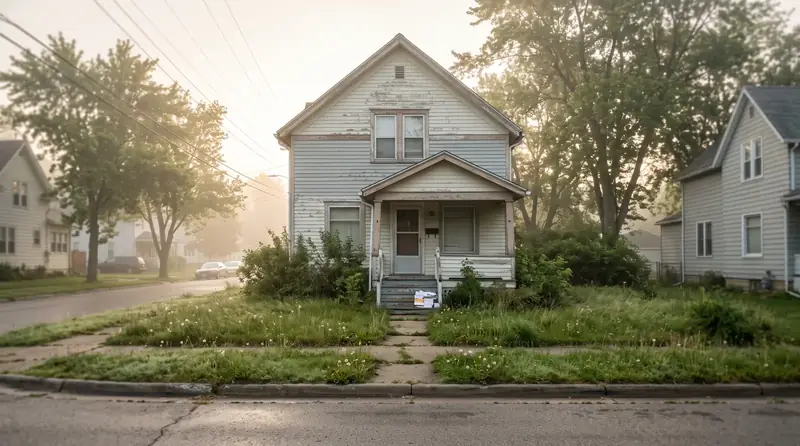
No single office holds the whole story. The auditor knows who owns the house, the treasurer knows they stopped paying tax, the probate court knows the owner died, and the city knows the roof is caving in. Joining these records by parcel number is what turns raw data into a lead. That is what LeadCounty does every week for every property in the counties we cover, from the official offices listed on our data sources page.
08Is this data free?
Most of it is public and free to look up one property at a time on county websites. The work is in collecting it in bulk, every week, from many different systems, cleaning it, and joining it correctly. That is the part you pay a data service for, so pick one that shows you where its data comes from and how fresh it is.