Skip to content
Try it free
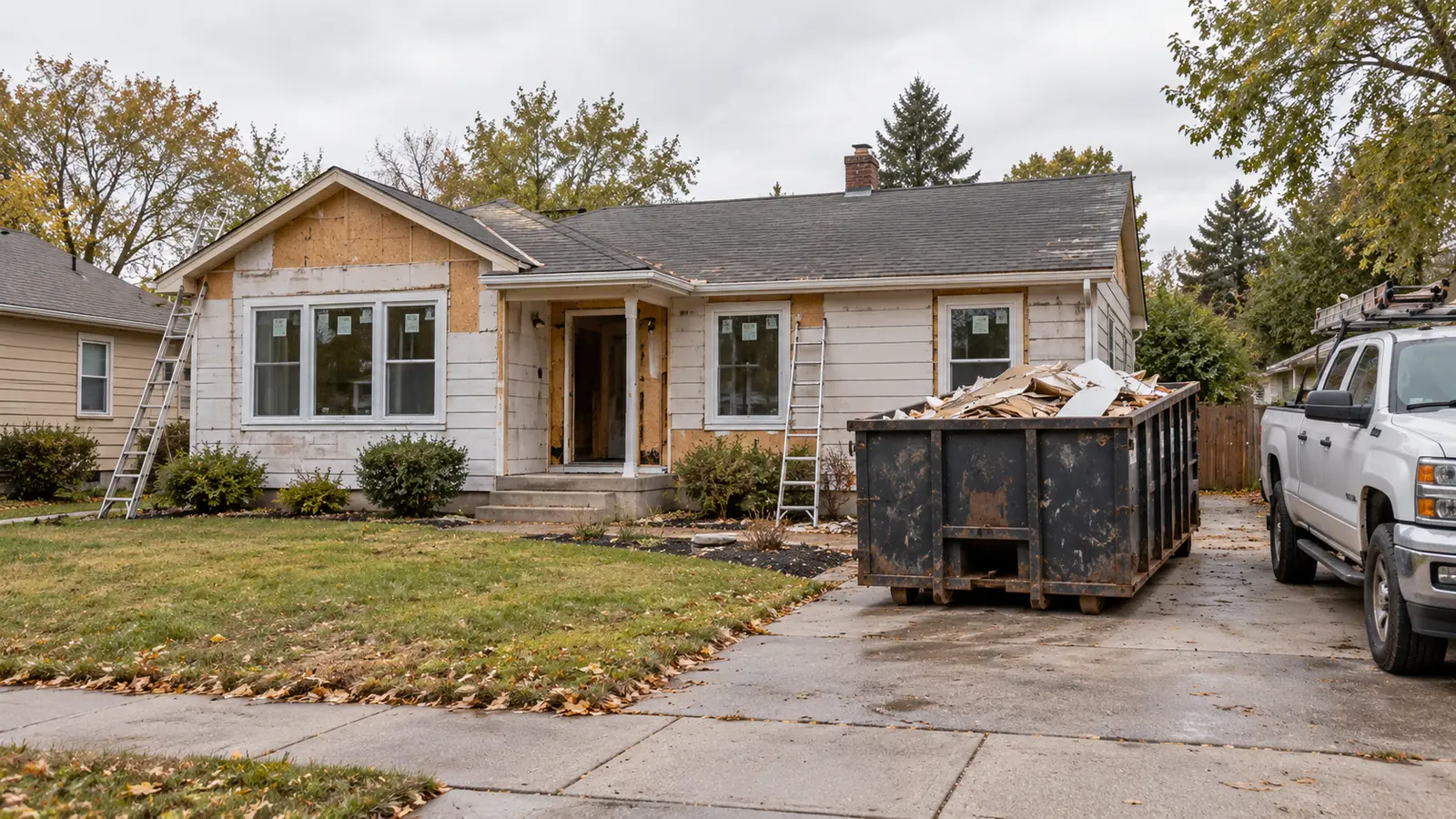
Older house under renovation with a dumpster in the driveway and a contractor truck
Deal analysis

Does the 70% rule still work in 2026? How pros calculate their offer

The 70% rule is the classic way to find a maximum allowable offer, but many flippers say it no longer fits today's market. Here is what it is, where it breaks, and the strike-price method experienced investors use instead.

LeadCounty editorial and data team3 min read · refreshed weekly

The 70% rule is the first formula most new investors learn: pay no more than 70% of the after-repair value (ARV) minus the repairs. It is simple and quick, and for years it kept flippers out of bad deals. In 2025–26, though, a common complaint in investor communities is that offers built on the 70% rule are "not even in the same stadium" as what sellers expect. So does it still work?

Fix and flip strike price formula: ARV minus profit, repairs, loan and holding costs, buying and selling costs

01What is the 70% rule?

Maximum offer = ARV × 70% − repairs. On a house worth $250,000 once fixed, needing $35,000 of work: $250,000 × 70% = $175,000, minus $35,000 = $140,000. The missing 30% ($75,000) is meant to pay the investor's loan, holding costs, buying and selling costs and profit.

02How wholesalers use it: MAO

A wholesaler sells the contract to a flipper, so the wholesaler's fee has to come out too: MAO = ARV × 70% − repairs − assignment fee. With a $12,000 fee the wholesaler's maximum offer in the example above is $128,000. Many wholesalers open lower, around 85% of their MAO, to leave room to negotiate.

03Why the 70% rule often fails in 2026

  • Selling costs, interest and insurance have all risen, so the 30% margin is used up faster.
  • Hot markets are crowded with buyers. Experienced investors report flips at 75–85% of ARV minus repairs.
  • The rule ignores the timeline. A six-month flip and a twelve-month flip have very different holding costs.
  • It hides bad inputs. A high ARV or a low repair estimate makes any percentage look fine.

04Different buyers pay different percentages

The percentage is really the end buyer's number, not yours. Flippers in slow markets may pay 65%. Typical flippers pay 70%. Some flippers and landlords will pay 75%. Buy-and-hold landlords can go to 80% because they never pay a selling commission. Know who you are selling to before you write the offer.

05The strike-price method experienced investors use

A lender with two decades of flipping explained it in a 2025 forum thread: never use a percentage; build the offer from real costs. Strike price = ARV − your profit − repairs (from a contractor's scope of work) − contingency − loan and holding costs − buying and selling costs. That is the highest price you can pay and still make your profit, whatever the market does.

06A worked example

ARV $265,000. Repairs $40,000 plus 10% contingency = $44,000. Six months with a hard-money loan at 11% and 2 points on 90% of the price and all the repairs. Holding $450 a month. Buying costs 2%, selling costs 7%. Target profit $30,000. The fix and flip calculator works this out to a strike price of about $153,000. The 70% rule would say $141,500 (ARV × 70% − $44,000), about $11,500 lower: this is why offers built only on 70% often lose to buyers who run the full numbers. On a slower or heavier project the gap can go the other way, which is why the full math matters.

07Use the rule as a filter, not a decision

  • Screen quickly with the 70% rule (or 75–80% for landlords).
  • For every deal that passes, run the strike price with real costs.
  • Check the ARV against the weakest comp and the repairs against a contractor.
  • Offer below your maximum, and walk away above it.

Both calculators are free: the wholesale MAO calculator for quick offers by buyer type, and the fix and flip calculator for the full strike price.


LeadCounty editorial and data team

We collect official county, court and city records every week and turn them into scored, explained property research for investors and agents. Every guide is based on how these public records actually work.

How we make these guides. We write from official offices and statutes, name the source of each number and fix mistakes when you tell us. See our editorial standards and methodology. What changed: the counts and examples are refreshed weekly.

Free calculators for this guide

Free, no sign-up, every step of the math shown with your numbers.

Questions

What is the 70% rule in real estate?

A quick screen for flips: pay no more than 70% of the after-repair value minus the repairs. The other 30% is meant to cover the loan, holding, buying and selling costs and the investor's profit.

Is the 70% rule still realistic in 2026?

In many markets, no. Forum threads from 2025–26 report deals trading at 75–85% of ARV minus repairs. Use the rule as a first filter, then run the full costs.

How do you calculate MAO for wholesaling?

MAO = ARV × the percentage your buyer will pay − repairs − your assignment fee. Flippers often pay 65–70%, landlords 75–80%.

What is a strike price in house flipping?

The highest price you will pay: the after-repair value minus your profit, repairs, a contingency, the loan and holding costs, and the buying and selling costs. It is built from your real costs instead of a percentage.

Sources and further reading

General information, not legal advice. Check the statute and your county office before you act.

Keep reading

All guides →
Real estate investor's desk with a laptop spreadsheet, calculator, floor plan and a model houseDeal analysis

Real estate deal analysis: the 13 numbers that decide a deal (2026)

ARV, repairs, MAO, profit, cash flow, cap rate, DSCR, cash left after a refinance, entry fee and more: what each number means, how to calculate it, and a free calculator for every one.Oct 14, 2026 · 4 min read
Mortgage papers, house keys, a pen and reading glasses on a kitchen tableDeal analysis

Subject-to real estate deals explained: entry fee, spread and due-on-sale

How a subject-to deal works, how to calculate the entry fee and monthly spread, how it compares with seller financing, and the due-on-sale risk every investor should plan for.Oct 14, 2026 · 3 min read
Suburban two-story house with a blank yard sign in the front lawn at golden hourDeal analysis

Seller net sheet: how to show a seller what they really keep (cash offer vs listing)

What goes on a seller net sheet, how to calculate a seller's net proceeds, and how wholesalers and agents use a cash-offer-vs-listing comparison to have an honest conversation with motivated sellers.Oct 11, 2026 · 2 min read