
Skip to content
Try it free
Empty rocking chair on the porch of an older family home in autumn
Lead sources

How to find inherited and probate properties in public records

The deeds, court filings and owner names that point to inherited houses, how soon heirs usually decide, and how to reach them kindly.

LeadCounty editorial and data team2 min read · refreshed weekly

Inherited houses are among the best leads in real estate: heirs often live elsewhere, share the house with siblings, and did not plan to own it. Public records show these houses in three places.
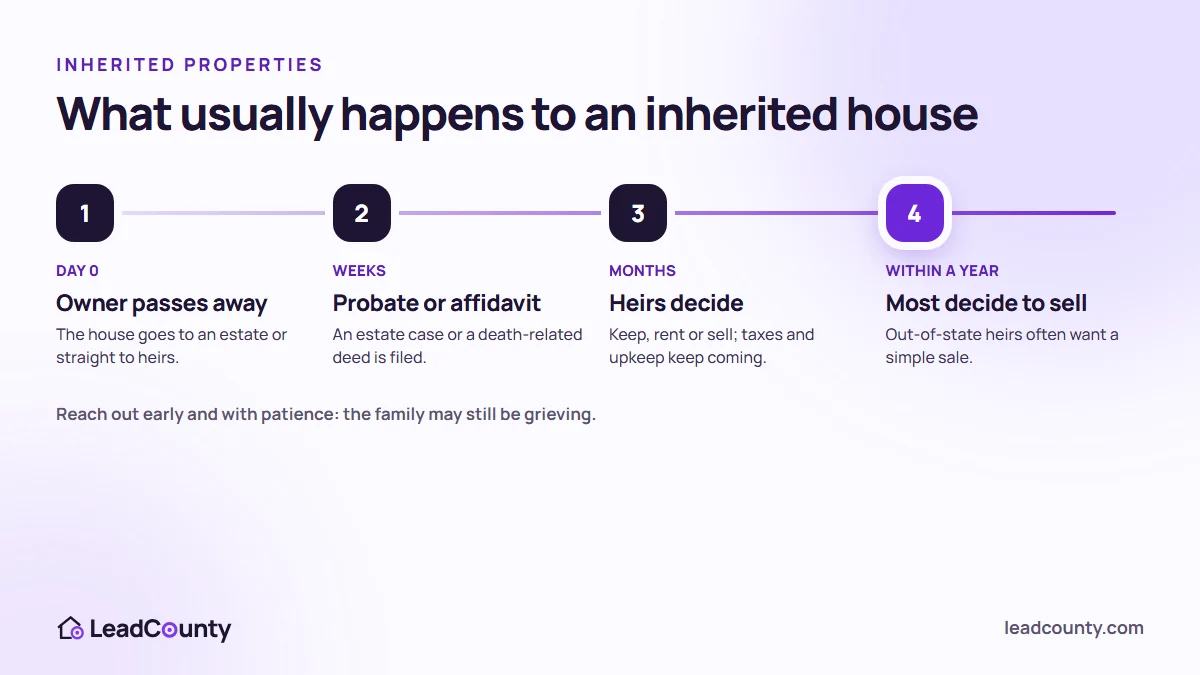
Timeline of an inherited property from probate or inheritance deed to the heirs' decision to sell

When a property passes to heirs, a deed is recorded. Its type gives it away: an affidavit of death or survivorship, a transfer-on-death deed, an executor's, administrator's or fiduciary deed, or a certificate of transfer in some states.

022. Estate and heirs owner names

When the estate itself holds the property, the owner of record often reads "Estate of", "Heirs of", or names an executor or administrator.

033. Probate court filings

Where the probate court publishes its case index, a new estate case is the earliest sign, often months before any deed.

04Timing

Most decisions happen in the first year: the family pays taxes and insurance on an empty house and decides whether to keep, rent or sell. Reaching out early, with patience, matters.

05How to reach heirs

  • Write to the mailing address on the tax roll: it is where the bills go.
  • Be kind and specific: offer a simple, as-is sale and flexible timing.
  • Never pressure; the family may still be grieving.

06Stack the signals

An inherited house that is also vacant, tax delinquent or owned from out of state is a much stronger lead. LeadCounty marks inheritance deeds and estate owners for every county we cover and lets you stack them with those signals, refreshed weekly.


LeadCounty editorial and data team

We collect official county, court and city records every week and turn them into scored, explained property research for investors and agents. Every guide is based on how these public records actually work.

How we make these guides. We write from official offices and statutes, name the source of each number and fix mistakes when you tell us. See our editorial standards and methodology. What changed: the counts and examples are refreshed weekly.

Sources and further reading

General information, not legal advice. Check the statute and your county office before you act.

Keep reading

All guides →
Real estate investor's desk with a laptop map, a county map and a model houseLead sources

12 signs of a motivated seller you can find in public county records

Tax trouble, inheritance deeds, code violations and more: the public records that point to owners who may want to sell, and how to read them.Oct 13, 2026 · 2 min read
Empty rocking chair on the porch of an older family home in autumnLead sources

Inheritance leads: how to help heirs and still find good deals

Why inherited houses sell, how to spot them in deed records, and a respectful way to reach out to families.Oct 11, 2026 · 2 min read
Older rental duplex with an overgrown yard on a cloudy afternoonLead sources

Absentee owners and tired landlords: finding them in county data

How we decide a property is absentee-owned, why out-of-state owners matter, and how to spot landlords who are ready to sell.Oct 9, 2026 · 2 min read